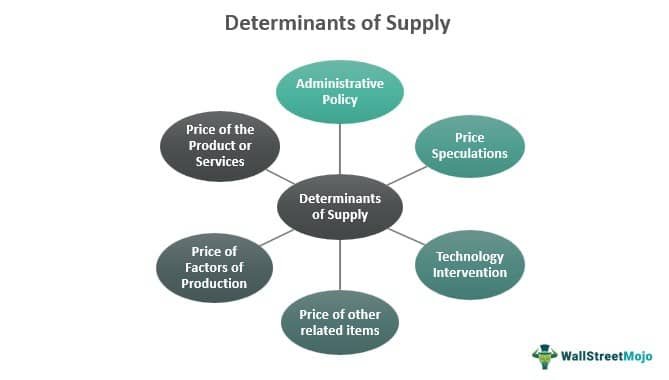
Determinants of supply refer to the factors influencing the quantity of goods producers are willing to offer at various price levels. These determinants play a crucial role in shaping market dynamics and pricing strategies. Shifts in supply can result from changes in production costs, technology, or government policies. Understanding what are determinants of supply is essential for businesses to predict market trends and make informed decisions. By analyzing these factors, businesses can adapt to changing market conditions and optimize their supply chain management for sustainable growth.

Exploring the Determinants of Supply
Welcome, young economists! Today, we are going to dive into the fascinating world of supply and discover what factors influence how much of a product or service a producer is willing to offer at various prices. These factors are known as the determinants of supply, and understanding them is crucial in predicting how businesses respond to changes in the market.
What is Supply?
Before we explore the determinants of supply, let’s first understand what supply means. Supply refers to the quantity of a product or service that producers are willing and able to offer for sale at different prices in a specific time period. It is the counterpart to demand and plays a key role in determining prices in a market.
Now, let’s take a closer look at the determinants of supply that influence how much goods or services businesses are willing to supply.
1. Price of the Product
One of the most important determinants of supply is the price of the product itself. As the price of a good or service increases, producers are generally willing to supply more of it because they can earn higher profits. On the other hand, if the price decreases, producers may reduce the quantity supplied to maintain profitability.
Imagine you are a lemonade stand owner. If the price of lemons goes up, you may decide to increase the price of your lemonade to cover the higher costs, leading to a higher quantity supplied.
2. Cost of Production
Another crucial factor that influences supply is the cost of production. This includes expenses such as raw materials, labor, and rent. If the cost of production increases, producers may be less willing to supply a product at the same price since it would eat into their profits.
For example, if the cost of sugar, one of the essential ingredients for your lemonade, rises, you might have to increase the price of your lemonade or produce less of it to maintain your profit margin.
3. Technology
Advancements in technology can also impact the supply of goods and services. Improved technology can lead to higher efficiency in production, reducing costs and enabling producers to supply more at lower prices. On the other hand, outdated technology may hinder supply by increasing production costs.
Let’s say you invest in a new juicer that can extract lemon juice faster and more efficiently. This technological improvement allows you to produce more lemonade in less time, increasing your supply.
4. Number of Sellers
The number of sellers in a market can affect supply as well. In a competitive market with many sellers, each producer’s share of the market may be smaller, leading to lower individual supply quantities. In contrast, in a market with fewer sellers, each producer’s supply may be larger.
Going back to our lemonade stand example, if more lemonade stands open up on your street, you may have to reduce your supply to attract customers, while in a less crowded market, you could potentially increase your output.
5. Expectations of Future Prices
Producers’ expectations about future prices can impact their current supply decisions. If producers anticipate that the price of a product will increase in the future, they may choose to decrease supply now and save inventory to sell at the higher price later. Conversely, if they expect prices to fall, they may increase supply to take advantage of current prices.
For instance, if you believe that the price of lemons will double next month, you might decide to reduce your lemonade supply now and sell the remaining stock at a higher price later.
6. Government Policies
Government policies, such as taxes, subsidies, and regulations, can also impact supply. Taxes increase the cost of production, reducing supply, while subsidies lower costs and can lead to increased supply. Regulations may impose restrictions on production, affecting supply levels in various industries.
Imagine if the government introduces a tax on sugar, a key ingredient in your lemonade. This additional cost might force you to reduce your lemonade supply to maintain your profit margins.
7. Natural Events
Natural events such as weather disasters, crop failures, or pandemics can disrupt the supply of goods and services. These events can lead to shortages or surpluses, impacting supply levels and prices in the market.
For example, if a hurricane destroys a large portion of the lemon crop, the supply of lemons may decrease, causing the price of lemons to rise and potentially reducing the supply of lemonade in the market.
Understanding the determinants of supply is crucial for businesses and consumers alike. By considering factors such as the price of the product, cost of production, technology, number of sellers, expectations of future prices, government policies, and natural events, we can gain insights into how supply levels are determined in a market.
Next time you visit a store or buy a product online, think about the factors influencing the supply of that item and how they impact its availability and price. Economics is all around us, shaping the choices we make as consumers and producers in the marketplace.
Keep exploring the world of economics, and remember, knowledge is power!
What are the Determinants of Supply? | Explained | IB Microeconomics | IB Economics Exam Review
Frequently Asked Questions
What factors influence supply in economics?
The determinants of supply in economics include the cost of production, technology, government policies, number of suppliers, expectations of future prices, and the price of related goods. These factors all play a role in influencing the quantity of a good or service that producers are willing and able to supply at various price levels.
How does the cost of production affect supply?
The cost of production, which includes expenses such as labor, materials, and overhead costs, directly impacts the supply of a product. When production costs increase, producers may supply less of the good or service at each price level, leading to a decrease in supply. Conversely, lower production costs can result in higher supply levels.
What role does technology play in determining supply?
Technological advancements can significantly impact supply by increasing efficiency and reducing production costs. Improved technology can enable producers to increase their output and supply more goods or services at lower prices, ultimately leading to an expansion in supply. On the other hand, outdated technology may hinder supply growth.
Final Thoughts
In conclusion, the determinants of supply in economics play a crucial role in shaping the availability of goods and services in the market. Factors such as production costs, technology, government policies, and expectations significantly influence supply levels. Understanding what drives supply can help businesses and policymakers make informed decisions to meet consumer demand effectively. By analyzing and responding to changes in the determinants of supply, market participants can adapt and thrive in a dynamic economic environment.