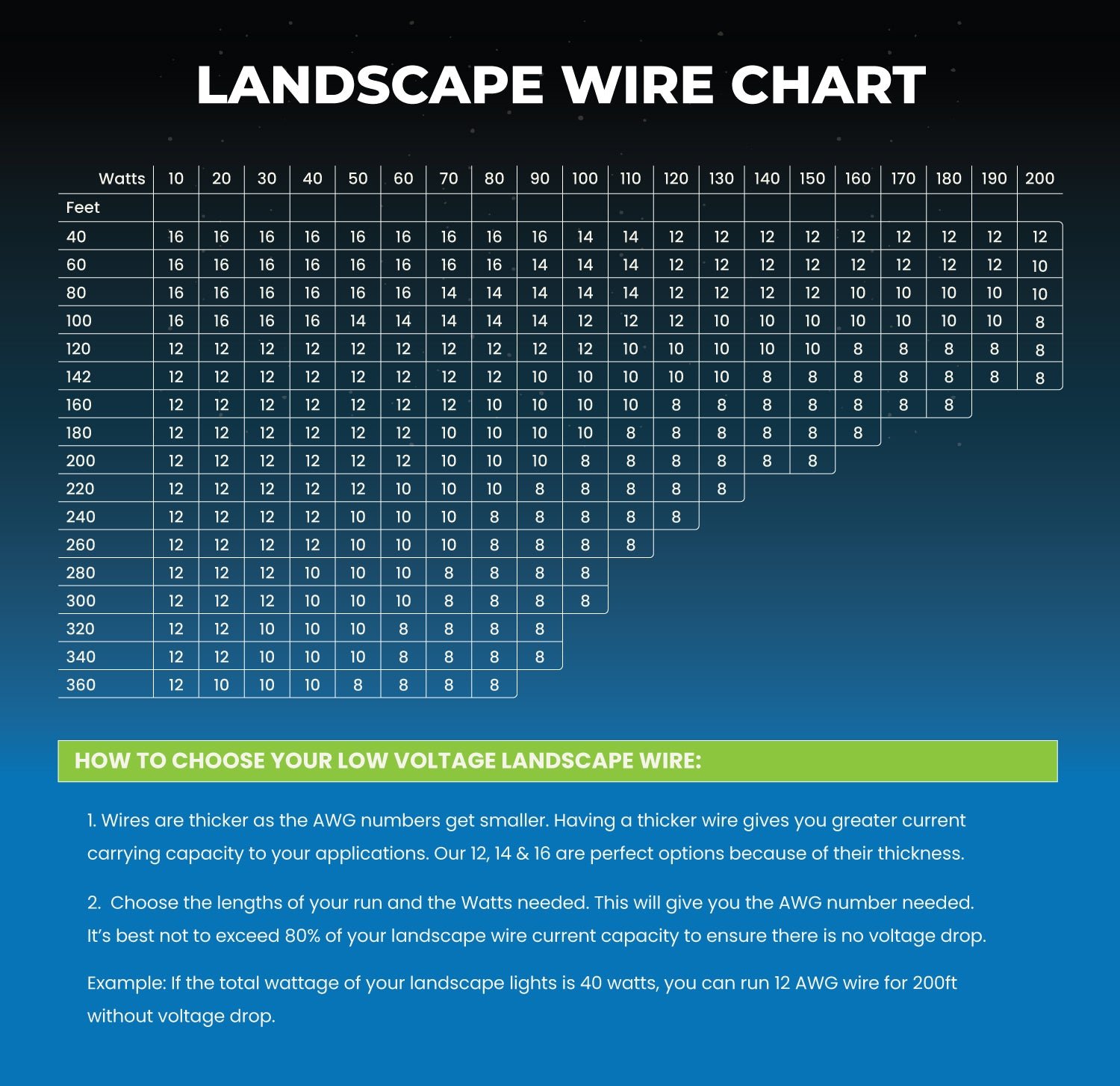
The ideal gauge wire for landscape lighting is crucial for a successful outdoor lighting project. Choosing the right wire gauge ensures your lighting system operates efficiently and safely. When determining what gauge wire for landscape lighting, consider factors like the distance between fixtures and power source. Using a wire gauge that matches the specific requirements of your landscape lighting setup will help prevent voltage drop and ensure consistent illumination throughout your outdoor space.

Choosing the Right Gauge Wire for Your Landscape Lighting
Welcome to our guide on selecting the perfect wire gauge for your landscape lighting project! Installing outdoor lighting not only enhances the beauty of your home but also adds an extra layer of security. However, one crucial aspect that often gets overlooked is the type of wire you should use. In this article, we’ll delve into the world of wire gauges and help you make an informed decision for your landscape lighting needs.
Understanding Wire Gauges
Wire gauges are a measurement of the diameter or thickness of a wire. The lower the gauge number, the thicker the wire. For landscape lighting, the most common wire gauges are 10, 12, and 16. Choosing the right gauge is essential to ensure that your lighting system functions efficiently and safely.
Factors to Consider
Several factors come into play when deciding on the appropriate wire gauge for your landscape lighting:
Length of the Wire Run
The length of the wire run refers to the total distance the wire needs to cover from the transformer to the farthest light fixture. Longer wire runs experience more voltage drop, which can affect the brightness of your lights. To minimize voltage drop, select a lower gauge wire for longer distances.
Wattage of the Fixtures
The wattage of your light fixtures determines the amount of power they consume. Higher wattage fixtures require thicker wires to handle the increased electrical load. Be sure to check the wattage of your fixtures before selecting a wire gauge.
Transformer Capacity
Your transformer’s capacity dictates the amount of power it can supply to your lighting system. Ensure that the wire gauge you choose can safely carry the maximum load supported by your transformer to prevent overheating and potential hazards.
Weather and Environmental Conditions
Outdoor lighting systems are exposed to various weather conditions, including rain, snow, and extreme temperatures. Opt for wires that are weather-resistant and UV-stabilized to withstand the elements and ensure longevity.
The Right Wire Gauge for Your Project
Now that you understand the key factors to consider let’s explore which wire gauge is best suited for different landscape lighting scenarios:
10-Gauge Wire
10-gauge wire is the thickest option and is ideal for long wire runs exceeding 200 feet or systems with high-wattage fixtures. It offers low resistance, minimizing voltage drop and ensuring consistent brightness across all your lighting fixtures.
12-Gauge Wire
12-gauge wire strikes a balance between thickness and flexibility, making it suitable for most landscape lighting projects. It works well for moderate distances and wattage ranges, providing a cost-effective and versatile solution.
16-Gauge Wire
16-gauge wire is the most lightweight and flexible option, perfect for short wire runs or low-wattage fixtures. While it may not be suitable for long distances, it is easy to work with and offers a budget-friendly alternative for smaller lighting setups.
Installation Tips
Regardless of the wire gauge you choose, here are some installation tips to ensure a successful landscape lighting project:
1. Always use waterproof connectors to protect wire connections from moisture.
2. Burry the wires at least 6 inches underground to prevent accidental damage and tripping hazards.
3. Avoid sharp bends or kinks in the wire to maintain optimal conductivity.
4. Test the entire lighting system before burying the wires to identify and address any issues upfront.
Conclusion
Choosing the right wire gauge for your landscape lighting is a critical step in creating a functional and aesthetically pleasing outdoor space. By considering factors such as wire length, fixture wattage, transformer capacity, and environmental conditions, you can select the perfect wire gauge for your specific needs. Whether you opt for a heavy-duty 10-gauge wire or a lightweight 16-gauge option, ensuring a well-planned and properly installed lighting system will illuminate your outdoor area for years to come.
We hope this guide has shed light on the importance of selecting the correct wire gauge for your landscape lighting project. Remember, when in doubt, consult with a professional electrician to ensure your system is installed safely and efficiently. Happy lighting!
What Gauge Wire Do You Recommend? | Extremely Common Landscape Lighting Wire Question
Frequently Asked Questions
What is the importance of using the correct gauge wire for landscape lighting?
Using the correct gauge wire for landscape lighting is crucial as it ensures proper voltage delivery to the fixtures, prevents voltage drop over long distances, and maintains the overall efficiency and safety of the lighting system.
How do I determine the appropriate gauge wire for my landscape lighting project?
To determine the appropriate gauge wire for your landscape lighting project, consider factors like the total wattage of your lighting fixtures, the length of the wire run, and the voltage drop limitations specified by the manufacturer. Typically, low-voltage landscape lighting systems require 12-gauge or 10-gauge wire.
What gauge wire should I use for shorter wire runs in my landscape lighting setup?
For shorter wire runs in your landscape lighting setup, such as under 100 feet, using a 12-gauge wire is usually sufficient. This gauge is suitable for distances where voltage drop is less of a concern and provides a balance between cost-effectiveness and performance.
Can using the wrong gauge wire affect the performance of my landscape lighting system?
Yes, using the wrong gauge wire can significantly impact the performance of your landscape lighting system. Using a wire that is too thin can cause voltage drop, resulting in dim or flickering lights, while using a wire that is too thick can be unnecessary and costly. It is essential to match the gauge of the wire with the specific requirements of your lighting setup.
Final Thoughts
In conclusion, selecting the appropriate wire gauge for landscape lighting is crucial for ensuring optimal performance and safety. Using the correct wire gauge helps prevent voltage drop and ensures efficient power delivery throughout the lighting system. When determining what gauge wire for landscape lighting, consider the total wattage of your fixtures and the distance the wire needs to cover. Prioritize quality materials and proper sizing to support a reliable and durable lighting setup. Selecting the right gauge wire is a foundational step in creating a well-functioning and long-lasting landscape lighting system.